
Tech Talk is a series of interviews that introduce you to some inspiring personalities within and outside of MD and the world of technology, innovation, and more.
In this edition, we met up with Ichiro Yamamoto, Business Development Manager at MD ELECTRONICS Japan, to ask what technologies are likely to prevail by 2035, and where can best-in-class data transmission solutions create tangible value?
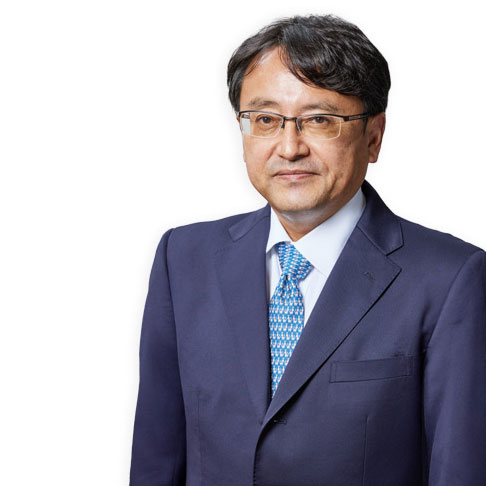
Ichiro, please tell us a little bit about yourself. What has been your career path so far and what brought you to MD ELECTRONICS?
I’m Ichiro Yamamoto. I live in Tokyo with my wife and have worked at the MD office in Japan for nearly 2 years. My career began in sales at a securities firm, but I quickly moved into the automotive sector. Over more than 30 years, I have worked in sales and business development for a range of automotive components from electronic parts, mechatronic modules and stamped metal parts to raw materials. That broad exposure helps me connect technical discussions with commercial objectives and maintain strong relationships with Japanese OEMs and suppliers. Before joining MD, I had global sales responsibility for Japanese OEMs, at several companies. I joined MD because I see strong potential for MD’s high-quality, cost-competitive and highly automated cable assembly portfolio to win business in Japan. Entering the market with relatively low brand awareness here is motivating for me! It’s a true growth challenge for a sales-minded person.
If you had to describe Japan’s 2035 automotive landscape in one sentence, what would it be and why?
I would say, a pragmatic mix: battery-electric vehicles (BEV) will grow steadily, hybrids will remain a mainstay and hydrogen will find targeted niche customers.
What realistic volume and application niches do you see for fuel-cell electric vehicles (FCEV) by 2035? Passenger cars, commercial, or mixed fleets? What impact will this have on the areas of on-board networks and data transmission?
FCEV will expand from today’s base, but they will not dominate by 2035. The most realistic growth is in commercial and government fleets where refueling can be centralized: buses, delivery fleets, long-distance coaches, and select heavy-duty use cases. Passenger FCEV will exist but remain niche.
Key constraints are hydrogen infrastructure density, energy cost, and storage safety. Hydrogen’s small molecule size increases leakage risk so high-pressure storage (e.g., 700 bar) and rigorous sealing are essential. Advances in sorbent materials (including metal-organic frameworks) are promising but must yet be proven in an automotive environment.
For wiring and data transmission, FCEV platforms still require robust high-voltage (HV) cabling, reliable low-voltage on-board networks, and hardened data links for stack control, thermal management, and safety monitoring. That means shielded two-wire Ethernet (100/1000BASE-T1) for diagnostics and control, and Mini Coax or HSD/H-MTD connectors for sensor and camera links. Suppliers who can guarantee 100% end-of-line test, full traceability and corrosion-robust connectors will be preferred partners.
Do you see compact vehicle formats as a constant and how will Kei/compact vehicles shape E/E architecture and connector choice?
Needless to say, Kei and compact vehicles will remain popular in Japan. Cost and space drive everything. With regards to E/E architecture, I think zonal or “semi-zonal” layouts will prevail to cut harness length and weight. Small and proven connector systems like FAKRA/FAKRA Mini for RF/Coax and HSD/H-MTD for high-speed will remain popular. The best solution will be to use existing concepts and parts as much as possible to keep costs and requalification procedures to a minimum.
Let`s talk about sensor fusion in compact cars. How will camera/radar/LiDAR be packaged in smaller vehicles without compromising signal and power integrity?
In my opinion by simplifying the physical layer and creating separate power and high-speed data routing. Currently, it seems Japanese OEMs have been hesitating to install these safety devices because one of the biggest selling points of their compact cars is the reasonable price. Having said that, the install ratio will gradually increase due to new safety regulations. Also, compact cars and Kei cars are very popular among elderly people so the demand/requirement of safety devices is a real need for these core customers. This means the market for data transmission will be increased naturally.
Japan is known globally for its stringent quality expectations. What will remain uniquely “Japanese” in terms of quality expectations (traceability, line automation, sampling plans)?
Japan will continue to insist on defect prevention, not just detection. End-to-end traceability and disciplined sampling including 100% end-of-line testing will still be mandatory but in my opinion production line automation will become the key quality component.
Suppliers that combine IATF 16949 discipline with modern line automation and fast containment will align best with Japanese OEM expectations.
Where do Japanese OEMs still seek niche excellence from Europe?
For Japanese OEMs, European partners remain valuable benchmarks for next-generation connector systems, optical data transmission and robust validation methodologies.
In summary, which key points will remain important over the next decade in Japan?
For me it’s clear that hydrogen and hybrids will stand alongside BEV as pragmatic options; wiring must manage mixed HV, thermal, and EMC environments without compromising quality or price.
All vehicle classes will demand space-saving, precise on-board networks and suppliers that can support these demands will be favored.
Japan’s quality culture rewards automation, full traceability, disciplined sampling plans, and 100% end-of-line tests which aim for true zero-defects. There will be a big opportunity for specialized European suppliers offering miniaturized, fully automated, fully tested cable assemblies with competitive cost and proven scalability. I see real potential for the MD Group here, as our automation assures high quality & full traceability and is more advanced than our competitors.
Ichiro Yamamoto, many thanks for this interesting conversation! Arigatou!
You might also be interested in

This corporate blog is for general information and marketing purposes and is not a controlled document of our quality management system (QMS). Translations may be produced with automation and are editorially reviewed; despite due care, errors are possible—only the officially published product documents are authoritative.